
The HLHK Difference: Teaching It Right the First Time
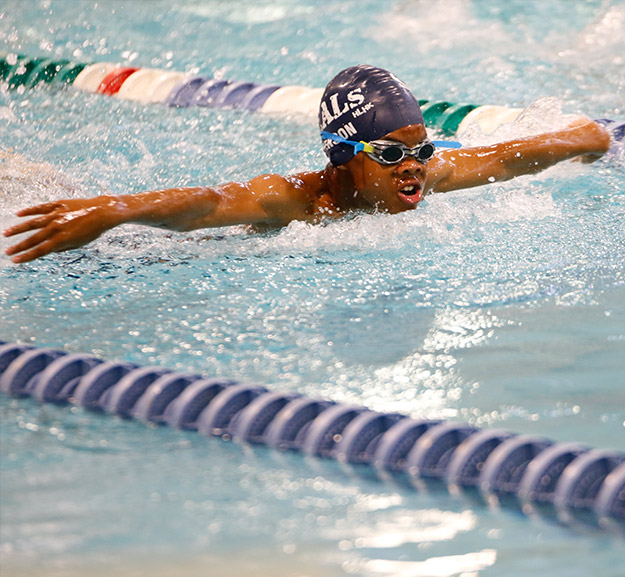
One of the most important differences between HLHK and traditional swim lesson programs is our commitment to teaching proper swimming fundamentals from the very beginning.
We believe that how a child learns to swim is just as important as whether that child learns to swim.
A swimmer’s first kick matters. Their first streamline matters. Their first breath matters. Body position, balance, breathing rhythm, propulsion, coordination, and stroke mechanics all establish the foundation upon which every future swimming skill is built.
These are not simply movements that children should be expected to figure out on their own. They are specific technical skills that must be taught, demonstrated, reinforced, and developed through knowledgeable instruction.
At HLHK, we invest considerable time in preparing and developing our instructors and coaches. Our instructional leadership works closely with staff to ensure that our youngest and least experienced swimmers are introduced to proper techniques from their very first lessons.
Why Proper Instruction Matters
Many swim programs focus primarily on helping a child become comfortable in the water or swim a short distance independently. Those are important accomplishments, but they represent only the beginning of aquatic development.
A child may learn to move across a pool without developing the proper body position, kicking technique, breathing pattern, or stroke mechanics necessary to swim efficiently.
When that child later enters a developmental or competitive swimming program, those habits often must be corrected before meaningful progress can occur.
Correcting established habits can require considerably more time and repetition than teaching proper techniques from the beginning.
At HLHK, we work to prevent those challenges by introducing sound fundamentals early.
We are not suggesting that every child must become a competitive swimmer. We are saying that every child deserves to be taught with the same attention to proper technique, regardless of whether their goal is water safety, recreation, fitness, or competition.
A child who learns correct fundamentals has a stronger foundation for everything that follows.
That foundation can help a swimmer transition from Learn to Swim into stroke development, from stroke development into competitive swimming, and from recreational swimming into high school, collegiate, or Masters competition.
Just as importantly, those same skills help children become stronger, safer, and more confident swimmers throughout their lives.
A Complete Developmental Pathway — Not Just a Swim Class
HLHK is designed to grow with the swimmer.
Our developmental approach provides continuity between the earliest stages of learning and the advanced stages of aquatic participation.
Learn to Swim → Developmental Stroke School → SEALS Competitive Swimming → Advanced Aquatic Opportunities
In our Learn to Swim program, we introduce water confidence, safety skills, breathing, floating, kicking, streamlining, and the foundations of proper swimming technique.
As swimmers become more independent, our Developmental Stroke School builds upon those fundamentals, introducing more advanced stroke mechanics, coordinated breathing, turns, endurance, and the skills necessary for continued improvement.
For swimmers interested in competition, our SEALS Swim Team provides structured training, stroke refinement, race preparation, conditioning, and opportunities to compete in organized swimming.
But competition is only one possible destination.
Some participants may become lifeguards, swim instructors, or coaches. Others may pursue scuba diving, recreational swimming, aquatic fitness, or Masters Swimming as adults.
Some will simply become parents who are comfortable around water and understand the importance of passing strong swimming skills on to their children.
We don’t believe a swimmer’s development should end when they can swim 25 yards. We believe that accomplishment should open the door to everything that comes next.

Preparing Children for Real-World Swimming Experiences
For many families, swimming becomes especially important when their children begin participating in camps, youth organizations, school activities, and recreational programs that require demonstrated swimming ability.
Organizations and activities such as Jack and Jill programs, Boy Scouts, YMCA camps, summer day camps, and other youth enrichment opportunities may require participants to complete swim evaluations or demonstrate specific aquatic skills before participating in certain activities.
These evaluations may include swimming designated distances, demonstrating particular strokes, treading water, floating, or showing the ability to remain comfortable and independent in deeper water.
At HLHK, we want our swimmers to approach these experiences with confidence rather than uncertainty.
We teach the foundational skills that help children prepare for these types of evaluations, while recognizing that individual organizations establish their own requirements.
Our goal is for parents to feel confident that their children have received comprehensive instruction and are prepared to demonstrate their abilities.
We want our swimmers to arrive at summer camp ready to participate. We want them to approach swim evaluations with confidence. We want them to enjoy boating, recreational swimming, aquatic field trips, and other water-related activities with the skills and awareness necessary to participate responsibly.
Most importantly, we want children to have the opportunity to participate fully in experiences that might otherwise be limited by their swimming ability.
Swimming should expand a child’s opportunities, not restrict them.
High School Swimmers: The Value of Experienced Coaching
High school swimming presents a different set of developmental challenges.
Many school swimming programs operate with limited practice time, shared facilities, and coaches who also serve as classroom teachers or other school personnel.
These individuals often make valuable contributions to their schools and athletes. However, managing a high school swim team and providing individualized, technically advanced swimming instruction are two very different responsibilities.
At HLHK, our coaching leadership brings 36 years of swimming experience and a deep understanding of competitive stroke mechanics, training progression, race strategy, conditioning, and athlete development.
Experienced coaching allows us to see more than simply whether an athlete can complete a workout.
We evaluate how a swimmer moves through the water, how efficiently they generate propulsion, how they breathe, how they turn, how they start, and how their technique changes as they become fatigued.
We look for strengths that can be developed and technical weaknesses that may be limiting performance.
Sometimes a swimmer’s greatest improvement comes not from swimming more laps, but from learning how to swim those laps more efficiently.
Our goal is to complement high school swimming programs by providing additional technical instruction, structured training, and individualized development.
Whether an athlete wants to make the high school team, earn a varsity position, qualify for a state championship, improve personal-best times, or pursue collegiate swimming, HLHK offers a development-focused environment built around those ambitions.
There is a difference between supervising swimmers through a workout and understanding how to develop a swimmer’s full potential.
At HLHK, that distinction is central to our coaching philosophy.
Exposure Creates Opportunity
One of the greatest barriers to participation in aquatics is simply a lack of exposure.
Many children have never attended a competitive swim meet. They have never seen a collegiate swimming competition, learned about USA Swimming, watched Masters athletes compete, or considered swimming as a pathway to a college scholarship.
Others have never considered becoming lifeguards, swim instructors, aquatic professionals, or scuba divers.
HLHK is committed to changing that.
We introduce our participants and families to the many dimensions of swimming and aquatic participation, including:
-
Learn to Swim and water safety education
-
Recreational swimming and summer league competition
-
Developmental and USA Swimming competition
-
Middle school and high school swimming
-
State, regional, and national-level competitive opportunities
-
Collegiate swimming and athletic scholarship pathways
-
Elite swimming, including Olympic Trials-level aspirations
-
Lifeguarding, swim instruction, and coaching careers
-
Scuba diving and other aquatic recreation
-
Adult swimming, Masters Swimming, and lifelong fitness
We believe that exposure can change expectations, and expectations can change lives.
A child who has never seen a swim meet may discover a passion for competition. A teenager who has never considered swimming in college may discover an opportunity to continue their education through athletics. A young adult who learned to swim with HLHK may return years later as a lifeguard, instructor, or coach.
Not every participant will become a champion, and that is not our expectation.
Our responsibility is to provide the foundation, introduce the possibilities, and help each individual discover what they are capable of achieving.